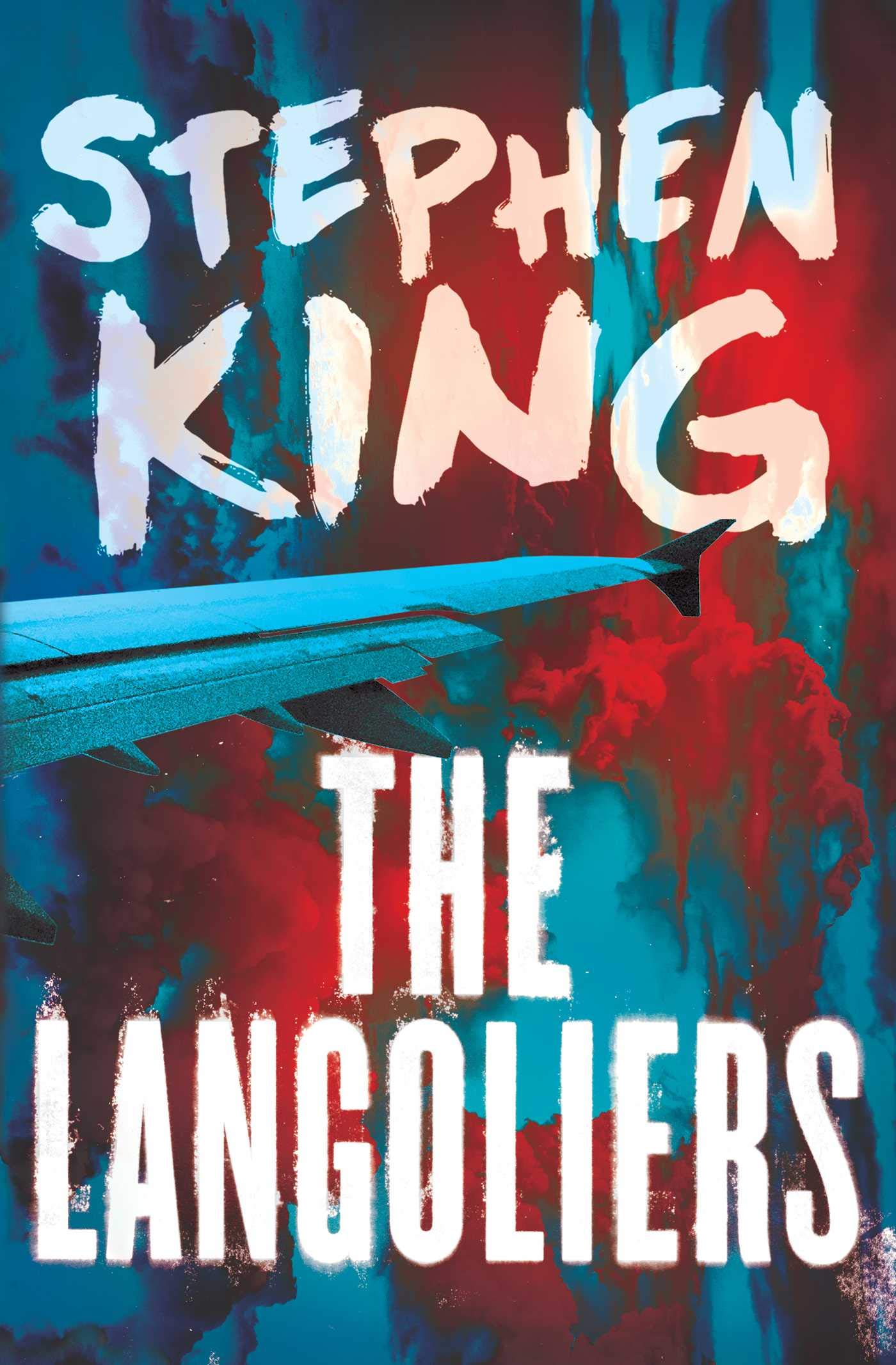
The Langoliers, Stephen King – Review
“They are eating the whole world,” he thought. “My God, my dear God, they are eating the world” (The Langoliers 233). Stephen King’s The Langoliers – published by SCIBNER in 1990, New York, NY- is a story that takes place on an unassuming, tedious American Pride flight from Las Vegas to Boston. King introduces us to Brain Engle, a pilot for American Pride, who just lost his ex-wife, Anne, to a tragic house fire in Boston. This prompts Engle to fly to Boston to arrange her funeral. Next, we are introduced to Dinah Bellman, a blind ten-year-old girl who is travelling with her Aunt Vicky to undergo life-altering surgery. King also introduces us to Albert Krausser, Nick Hopewell, Bethany Simms, Don Gaffney, Craig Toomy, Laurel Stevenson, Rudy Warwick, and Bob Jenkins. These ten individuals will wake up to discover that their fellow passengers and crew have disappeared without a trace. Bob Jenkins, a fictional mystery author, soon discerns that they have flown through a time rip, but they also learn that they are not alone in this mysterious backwards world. Gluttonous, gourmandizing creatures from childhood nightmares, known as the langoliers are devouring the world before their eyes. They will have to work together to make it out of this outlandish world alive before the langoliers devour them as well. The Langoliers is a suspenseful, apprehensive horror novel that keeps the characters as well as the reader in the inexplicable and unknown. King uses foreshadowing, diction, and personification to create an uneasy atmosphere that keeps the reader on the very edge of their seat while also being an utterly prepossessing read that captivates and engrosses till the very final page.
Throughout the novel King uses diction to bring characters to life, where they are from, their age, and their background. King’s use of the rhetorical device allows him to make each character their own person during the story. For example, King clarifies that one of our main characters, Nick Hopewell, is of European descent, and in order to show or “prove” this European descent King uses slang that is traditional to Europe. Examples include “you’re a bloody-minded little bugger” and “Marvelous American program” (The Langoliers 33). Another example of King’s use of diction is the slang and puns the younger characters, such as Bethany Simms, use. Bethany can be assumed to be around school age because she says, “even though school starts in ten days,” (The Langoliers 77) so King uses common slang for teenagers. Some examples of this slang are “I don’t suppose you’ve got any grass, do you?” and “This is just the ultimate hairball, you know?” (The Langoliers 77-78). All these examples fall under the rhetorical device diction. Stephen King’s use of diction allows him to distinguish between the characters and diversify them throughout the story. Although I am fond of and adore all the characters in The Langoliers, why did King choose to include so many characters, each with their own distinctive dialect and personality? Not only does it leave many opportunities for error and plot holes it also requires a great magnitude of effort which could only be performed by an experienced and well-rounded author.
To transition the story from the climax into the falling action King uses the literary element of foreshadowing (suggestions or warnings about events to come). During the story, our main characters all share the same universal question with an almost impossible answer; How do we survive and escape this mysterious, horrid world? King planted several quotes in the novel to foreshadow the answer to this problem. Some examples include “Caution: Two-Way traffic ahead” and “Whatever it is, it seems to be catching” (The Langoliers 158–159). These signs are eventually noticed by young Albert Krausser, which ultimately leads the characters to the eventual return to their normal, mundane world. I feel that King uses foreshadowing in a way that allows a fluid and smooth transition to the falling action of the story whilst keeping that uneasy atmosphere and subtle, unconscious, nagging fear of wondering if the characters will make it out of this situation alive. Though, one thing I did not expect out of Stephen King was his very subtle use of foreshadowing in the novel. He makes seemingly insignificant quotes and things that a normal reader would not think of to be a clue or “warning” that would lead to the solution of the conflict in the story. I believe it fits the narrative of the story of keeping the characters, and reader, in the inexplicable and unknown about the langoliers and whether the characters would survive this encounter.
To describe the gluttonous, world-devouring creatures, the langoliers, King uses eerily human-like descriptions to instill more fear in both the characters and readers. The use of human descriptions to describe something inhuman is called personification. Personification can drastically change the tone or mood of a novel, and I believe that King did just that. He makes these inhuman, disgusting, revolting creatures resemble human beings. Examples of this are “They eyes were only rudimentary indentation, but the mouths were huge: semicircular caves lined with gnashing blurred teeth.” and “You can’t get away from them, his father said, because of their legs. Their little fast legs,” (The Langoliers 229-230). Having the characters see and describe these ugly, horrid monsters as something even remotely human at all instills an extremely uneasy feeling in the reader, and I believe this is caused by a subconscious fear that inside humans are just beautiful, sentient monsters that parade themselves as better than everything and everyone else, and no one wants to accept that as even a remote possibility. Another example of personification is when King writes “They are eating the world, he thought, My God, my dear God, they are eating the world.” King could have chosen any number of words instead of eating, such as devouring, consuming, or even absorbing that would have described these world devouring monsters better than “eating”, but he chose to use a word that resembles a human action. It induces a fear in the reader that is not fully gotten rid of until the characters are safe and sound back in their own world, and I believe this is the true definition of a horror novel. Keeping the reader fearful but intrigued, anxious and on the edge of their seat while so engrossed in the novel they would never dream of putting it down.
The Langoliers by Stephen King is a trepidatious, anxiety inducing novel that will keep readers in suspense throughout the entire story. King uses literary elements, rhetorical devices, and figurative language to diversify characters, create fear, and to progress the story. I would strongly recommend this book to any horror or Stephen King fan who love being filled with anticipation about what is to come next, who love feeling the fear and anxiety of unknown, and who enjoy a short, but engrossing read that will captivate until the very end. However, I would not recommend this book to anyone who is easily frightened, who likes to be “in the know” throughout a book, and who has an uneasy stomach and cannot handle mild gory themes throughout a book. Though The Langoliers was a novel written purely to entertain and frighten, I believe that this book has a deeper meaning rooted in it. While I do not think that this book will ever have a strong societal or political impact in our world, I believe that it is a truly engrossing book that everyone should sit down and read at least once.