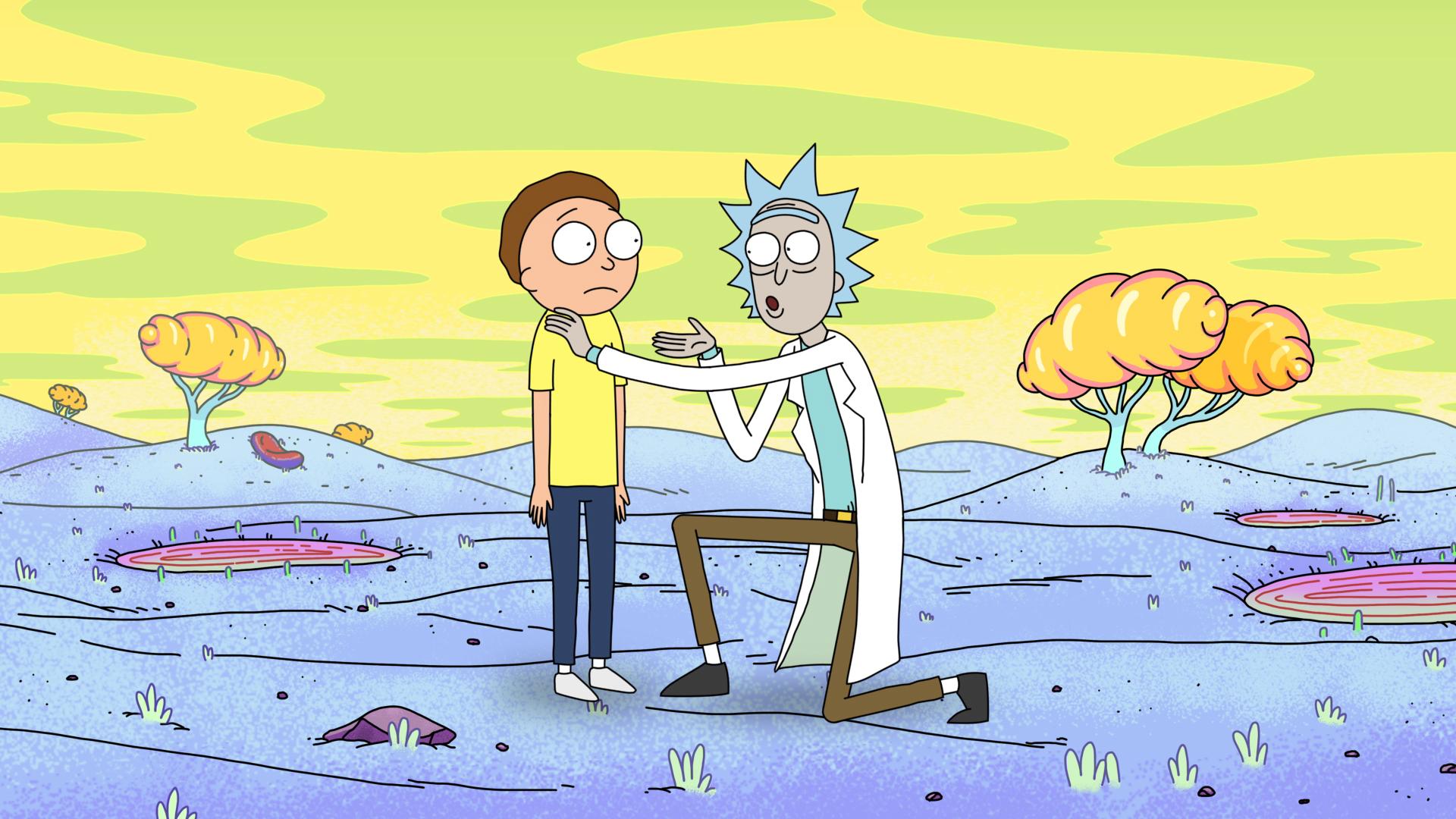
The Comedy of Rick and Morty
by Lauren New
For years, Rick and Morty has built its identity on dark humor, absurd situations, and subjects many other shows avoid. Some viewers see the controversial jokes as part of what makes the show entertaining, while others believe it goes too far. Different generations have varying opinions on where the line between comedy and offensiveness is.
“I think it’s funny; I’m used to that. That’s kind of how my mom’s humor is, but I can see where others would find it offensive,” said Alyshia Holstein, a mother.
Holstein said that, although she can appreciate some of the show’s humor, she does not believe it is appropriate for a broad audience. Her concerns largely come from the show’s frequent use of sexual humor, substance abuse, and other taboo subjects.
“Definitely not. And I’m gonna go with, well, because they make a joke of it,” Holstein said. “So, no, they don’t really do it with any type of responsibility”
While Holstein sees the show’s humor as potentially irresponsible, student Luke Baldwin views the controversial material as one of the show’s defining characteristics. He compared Rick and Morty to other adult comedies that are willing to push boundaries.
“They’re not afraid to do really out-there things, and I kind of appreciate that,” Baldwin said.
For Baldwin, the controversial humor is not simply something added to the show; it has become part of its identity. He believes removing that humor would change the character of the series itself.
“If you took it away from the show, it just wouldn’t really be the same,” Baldwin said.
However, Baldwin acknowledged that some of the show’s jokes can still make viewers uncomfortable, particularly when it comes to sexual humor. He believes the comedic presentation can sometimes make those moments easier to accept.
“I feel that kind of offsets it a little bit,” Baldwin said. “The humor tied to it, that is.”
Bradford Holstein, a regular Rick and Morty enjoyer, also sees the show’s controversial subjects primarily as comedy rather than an attempt to responsibly discuss serious issues. Unlike Alyshie, however, he said he could not recall any episodes that made him particularly uncomfortable.
“I think it’s supposed to be funny, not serious or responsible,” Bradford Holstein said.
Holstein also believes the show’s controversial material does not always contribute to its story. Instead, he sees many of the taboo subjects as a way for the show to create humor.
“I personally don’t think it crosses a line but also doesn’t always serve a purpose in any storylines either. I think it’s more humor-driven,” Holstein said.
Laurel Henson, a grandparent and occasional Rick and Morty viewer, offered a different interpretation. Rather than seeing the show’s dark humor as simply offensive or comedic, Henson believes it can sometimes be used to confront difficult subjects and challenge the audience.
“Instead of dodging heavy topics, Rick and Morty uses a wide range of absurdities to force their audience into uncomfortable confrontations with reality,” Henson said.
Henson also believes there is a difference between the show’s earlier episodes and its more recent material. In her view, some of the earlier episodes relied more heavily on shock value, while later episodes can use controversial subjects to communicate a larger idea.
“I think they do, but in earlier episodes they did NOT. They were going for shock value in those episodes without any type of message or lesson,” Henson said.
Henson said the show’s use of taboo subjects can also serve a purpose by making serious or uncomfortable situations easier for audiences to confront. Rather than presenting tragedy in a completely serious way, she believes the show’s absurdity can take away some of the heaviness surrounding difficult topics.
“I think it serves a purpose in its ability to ‘strip away’ the heaviness around tragedy, making it something you can not only laugh about but also live through,” Henson said.
To further this, Henson pointed to Rick’s attempted suicide following his breakup with Unity as an example of the show’s ability to use dark humor while portraying serious consequences. She said the episode demonstrates Rick’s depression and addictions without making those behaviors seem desirable or romantic. For Henson, moments like this show that the show’s humor can have a deeper purpose beyond simply shocking its audience.
“Through dark humor, they were able to show how both Rick’s misery and substance abuse are not ‘cool traits’ and also strip away any romanticism surrounding the ‘tortured soul,’” Henson said.
Different opinions about how age can affect a viewer’s reaction to the show were also revealed. Alyshia Holstein said she would not recommend it to someone sensitive to taboo subjects because the show contains many of the topics that would make them uncomfortable. Baldwin agreed that he would be more cautious recommending it to someone sensitive to controversial material. Bradford Holstein had a similar response.
“No, because I don’t think it would be enjoyable for them. It would probably do more harm than good,” Bradford Holstein said.
Henson, however, would be more selective. Rather than rejecting the show entirely, she said she would recommend individual episodes while avoiding some of the earlier material that relied on shock value.
The different reactions to Rick and Morty demonstrate why the show’s controversial humor continues to generate discussion. To some viewers, the dark jokes are simply part of an adult comedy. To others, they cross boundaries that should not be crossed for the sake of a punchline. And for some, the discomfort itself is part of the show’s purpose.
Ultimately, whether Rick and Morty is seen as funny, offensive, or meaningful depends entirely on the viewer—and where the viewer draws the line.